

Airbnb User Interface Website Redesign
The purpose of Airbnb is to build a network where anyone can belong anywhere and to create an end-to-end travel platform that will handle every part of the travel experience. Airbnb began in 2008 in San Francisco, CA and has grown internationally to host and invite travelers to stay in over 100,000 cities around the world. Airbnb’s platform is fueled by the loyalty of their host and guest community, and they pride in offering positive experiences through meeting their user’s needs, whether they are seeking unique listings and high-quality accommodations. Airbnb’s goal is to create new ways to travel that cannot be found anywhere else.
Goals
One of Airbnb’s main goal is to book an accommodation at their user’s travel destination. Airbnb’s other goal is to promote and give its guest users the local experience through the host, a local to the area.
Airbnb’s website interface is a source for users to take part in its networks and a point of reference for users’ questions as well. The website interface is well designed because it is easy to navigate through until the user reaches his or her end goal. The goal of this project is to innovate improvements that will aid in a better user experience.
The Search Engine, Content Management and Hierarchy are three aspects, which will be investigated and analyzed to find opportunities for Airbnb to grow.

Site Analysis

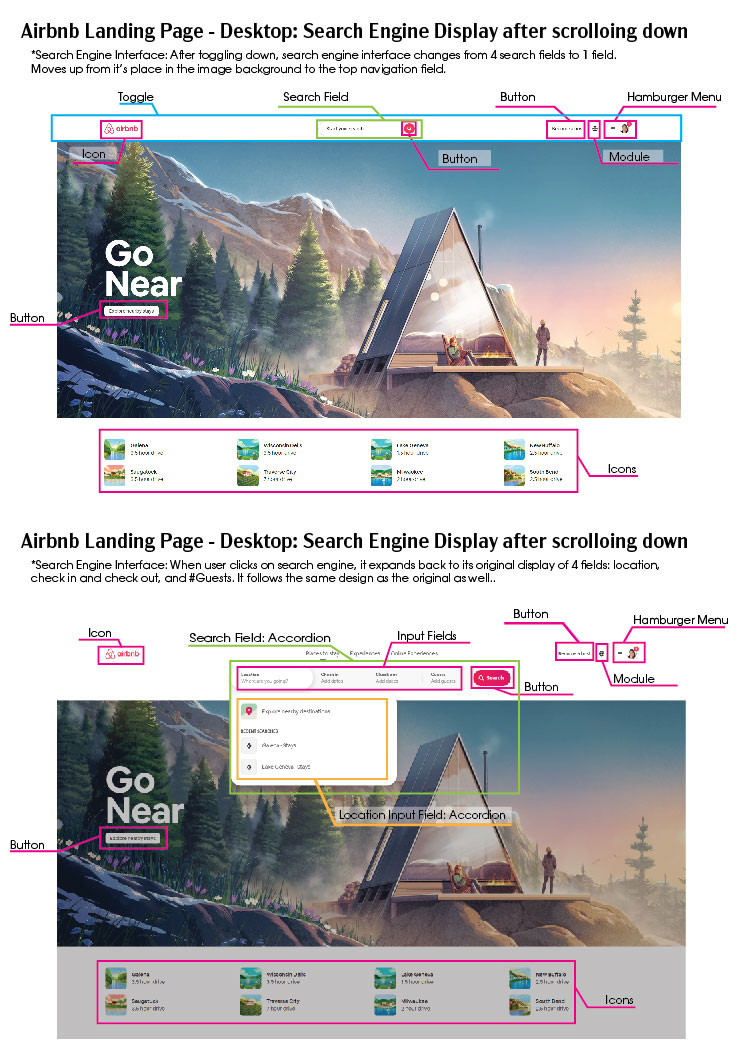

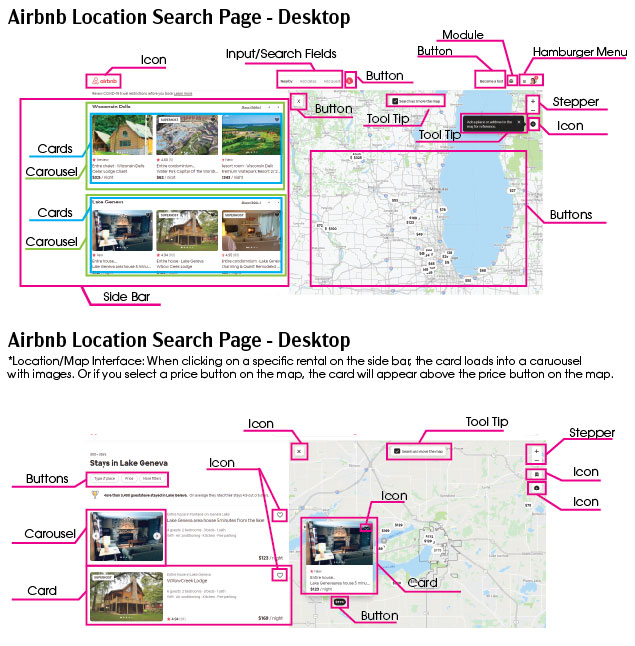

SWOT Analysis
The number of users who turn to Airbnb’s interface to plan their adventures. Airbnb has a large database with a wide network of places to stay with unique and different qualities and amenities, which sets it apart from other brands. Airbnb provide opportunities that commercial hotels and inns cannot provide. One example is Airbnb allows users to rent entire homes at a lower cost for individuals and large groups, which allows guests to have their own space and freedom without concerning other guests. Airbnb is recognized to promote the local experience because its accommodations are hosted by locals that live in the property or own it.
The second takeaway is directed towards potential partnership opportunities for Airbnb. Currently, Airbnb’s partnerships focus on community activism and services, rather than travel deals and services. These partnership helps to humanize the company, but there is room for more opportunities. Airbnb can join with customer service brands, providing more amenities for their guest and host users, while showcasing their community partnerships.
The third takeaway is safety. Airbnb is not perfect. However, due to its recognition and reputation, users overlook its flaws because they trust the brand more than they doubt it. Why? It is because Airbnb has a vast network of user as both guests and hosts. An example would be that both, hosts & guests, do not have a verified background check is overlooked by the provided images in which hosts post on their listings, and the abundant number of users’ shared ratings and reviews. It appears that it is sufficient evidence to give assurance that the rental is a reliable accommodation.
SWOT Diagram

Usability Testing
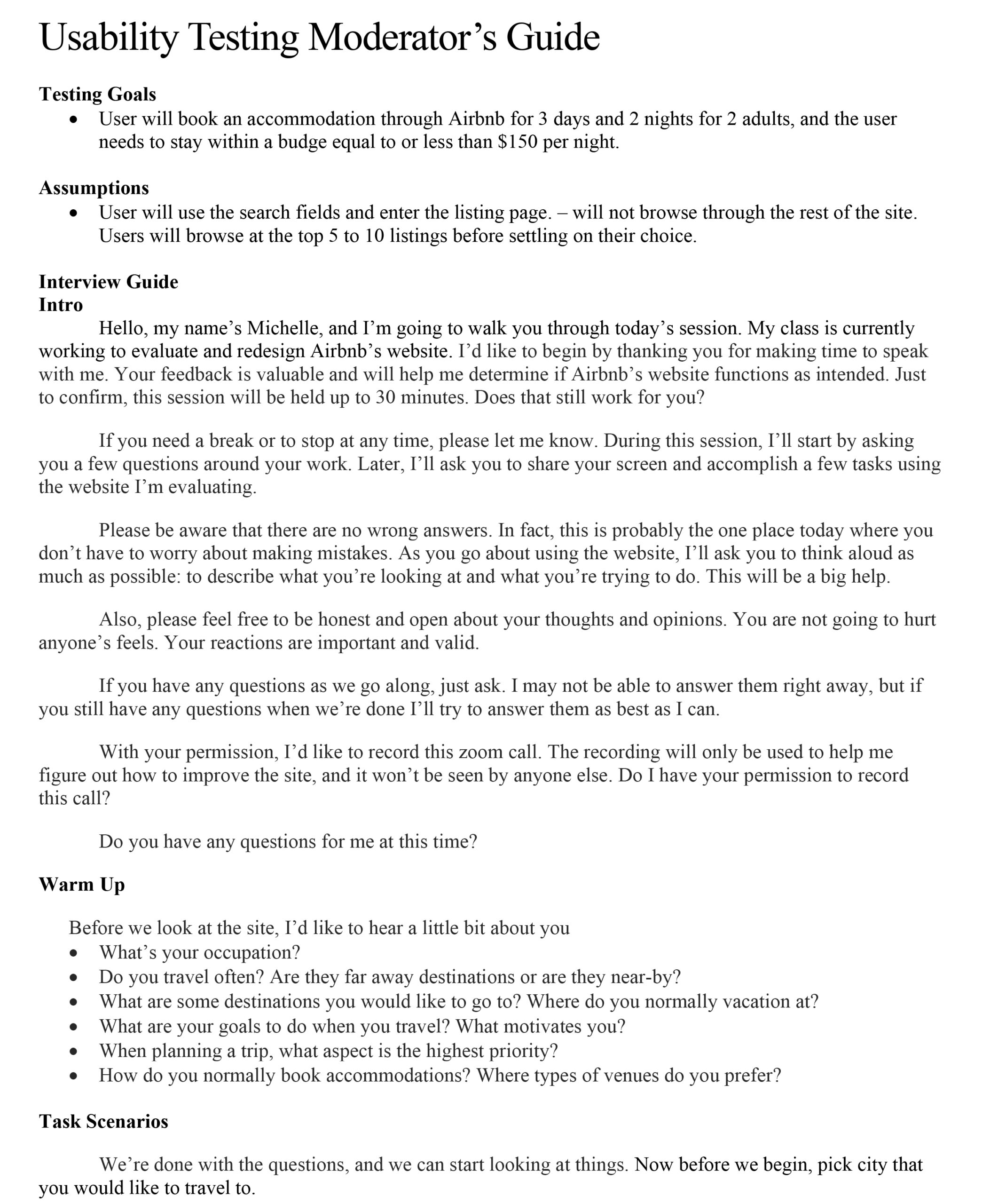
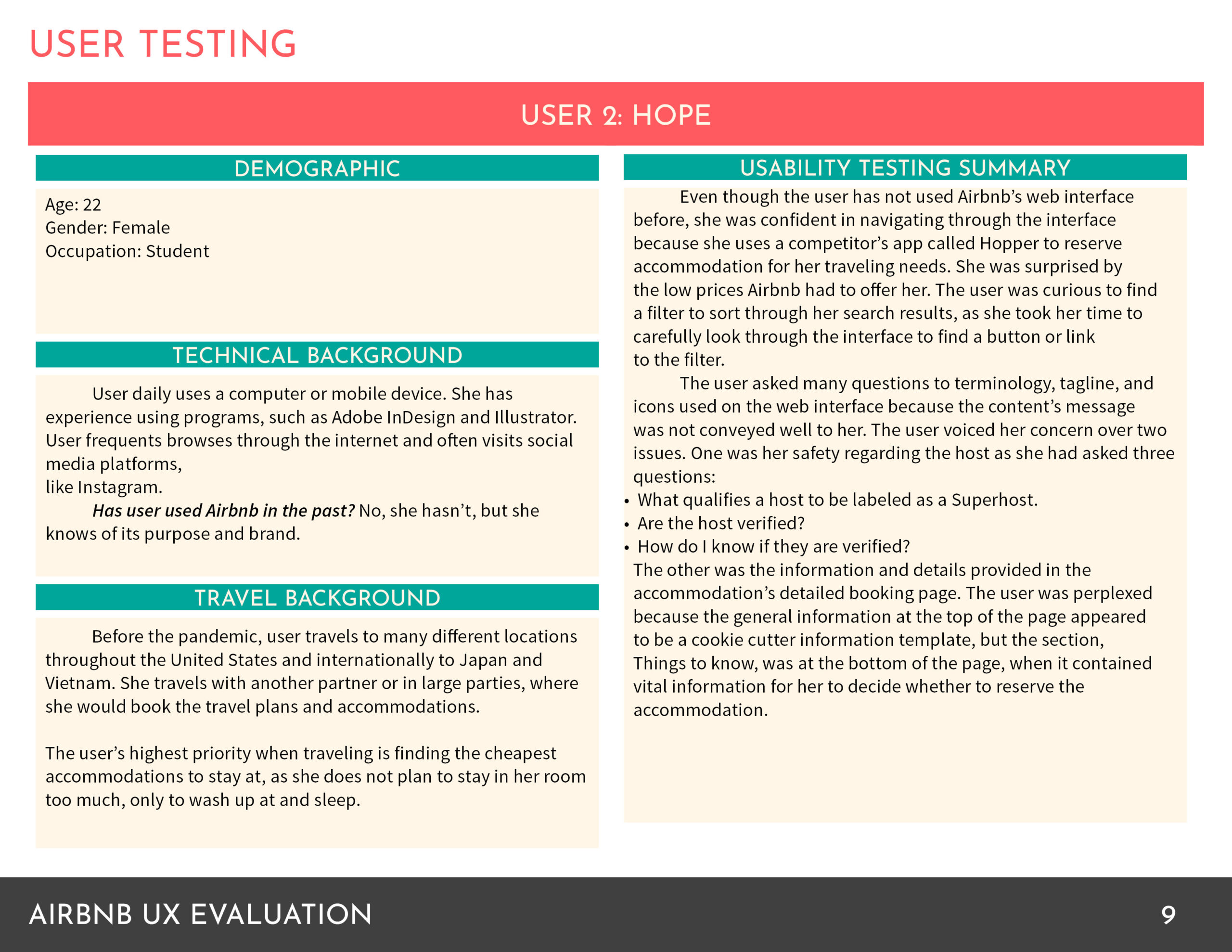
Usability testing was performed to investigate how users performed while interacting with Airbnb’s web interface. The test script created a scenario that the users would act out, so observations and insights were obtained through focusing on what the user did throughout the test scenario.
I had four volunteers go walk me through how they navigate through the Airbnb website, following the scenario scripted below.

User Testing Result summaries



User Testing Result Sorted notes


Personas
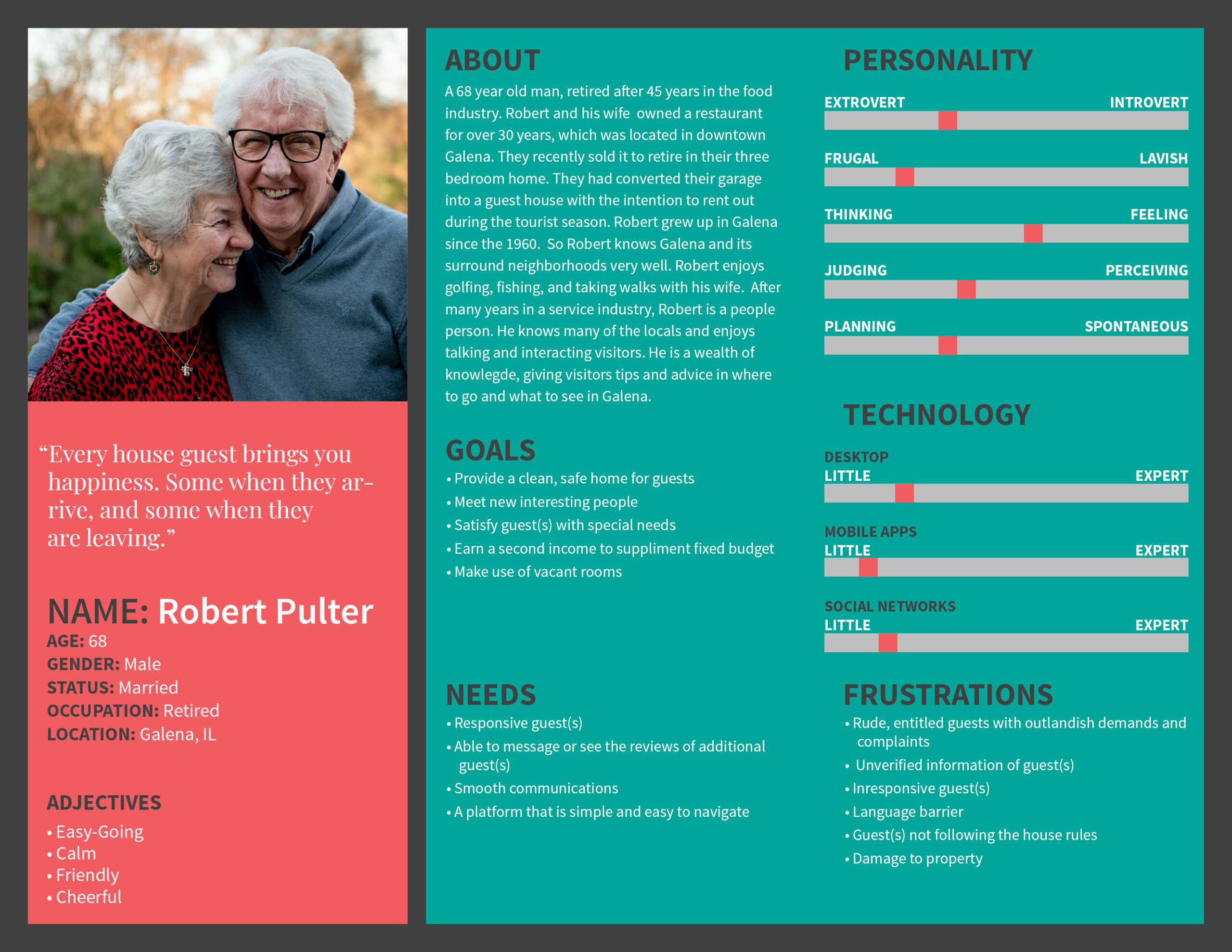
Airbnb caters to two audiences: guests and hosts. Guests are the primary users for the interface as they are actively using it to find accommodations for their travels. However, the backbone of Airbnb’s network are the hosts as well, as they are the network of people who provide their homes to invite guests to stay over. To help customize and design the web interface to user specification, personas are created to help tell the story of the user’s journey.
According to Airbnb, guests’ estimated age demographic is to be around 18-39 years old, single, newly married couples and families. Their background is middle to upper class, that have luxury to travel and vacation. The primary audience’s main goals to use Airbnb is:
• Looking for affordable accommodations
• Wish to book quickly with little hassle through app/website
• Pick different types of accommodations from an entire house to 1 room at whatever cost they are willing to pay.
• Looking for unique locations in urban or rural settings.
• Stay in direct contact with host through apps chat/massager
According to Airbnb, hosts’ age demographic range is estimated to be 30-60 years old. Their background is middle to upper class, as they have available real estate to rent out to guests. The secondary audience’s main goals in associating with Airbnb and being a part of its network is:
• Owners or renters with available space
• Airbnb has a large network of potential guests booking for a room
• They can gauge what prices to charge from reviewing other host sites around their area
• They have competitive awareness by comparing their rentals and their profiles to others around their area
A persona were created for each category as a guest and host, using the data points above. Changes were made to the web interface redesign, so that it can meets some of the standards that the persona created.
Primary Audience (Guest)

Secondary Audience (host)
Information Architecture
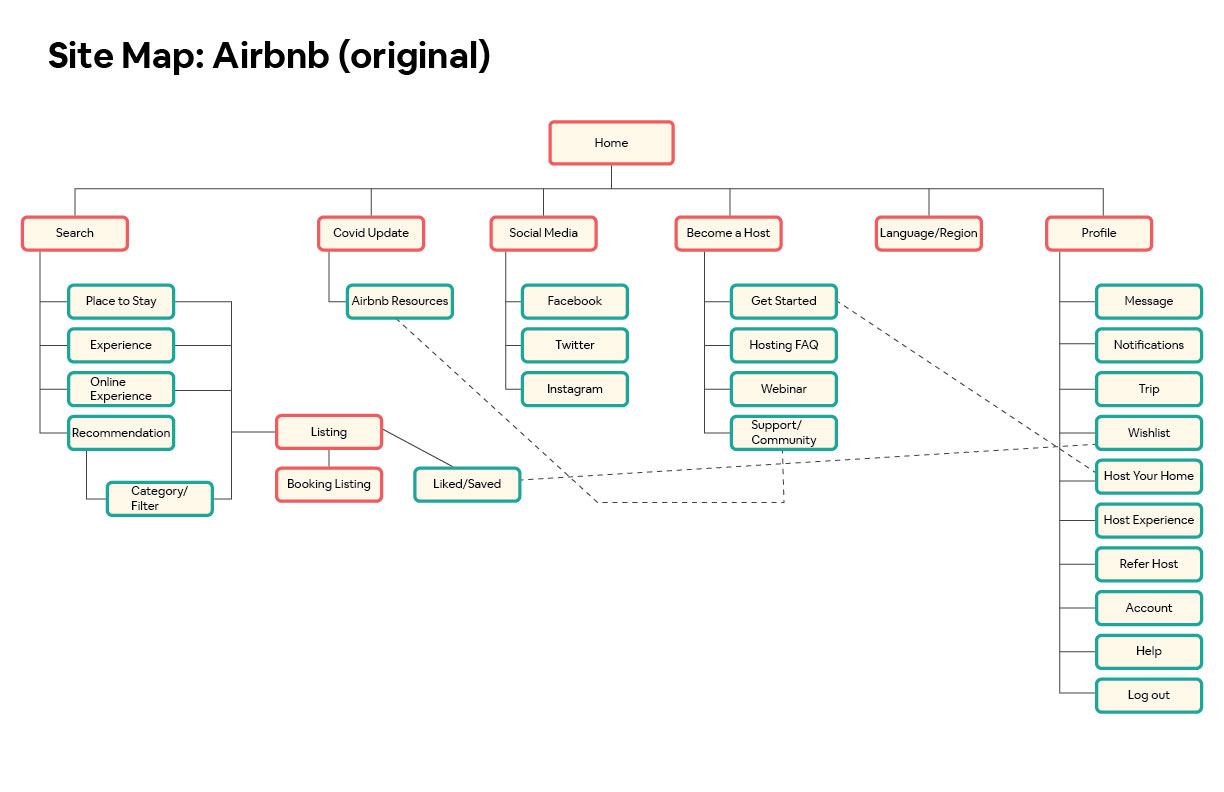
The Information Architecture Plan provides out the blueprint in how to navigate through the web interface. Originally, Airbnb’s focus is on the search engine, which is the primary landing page for the web interface. The search page is designed to provide multiple opportunities for users to search through its database to find accommodations. The search engine would lead to the search listings and then the bookings page. The search engine is the landing page of site. Covid updates, social media, Become a Host, language, and profile are all there as well, but all these features are identified in smaller typography or scattered throughout the landing page. There is very minimal focus on the secondary user, Hosts, as majority the attention is given to the primary users. This is an issue that the new IA plan will address.
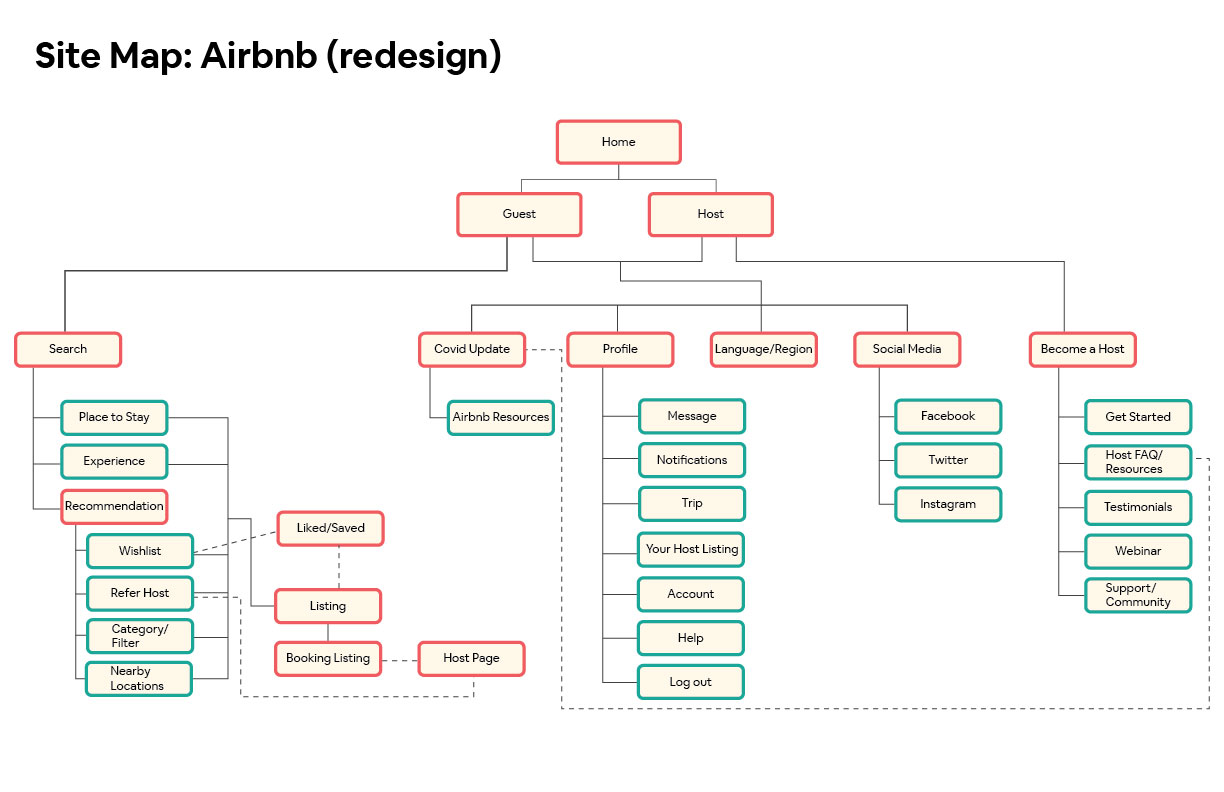
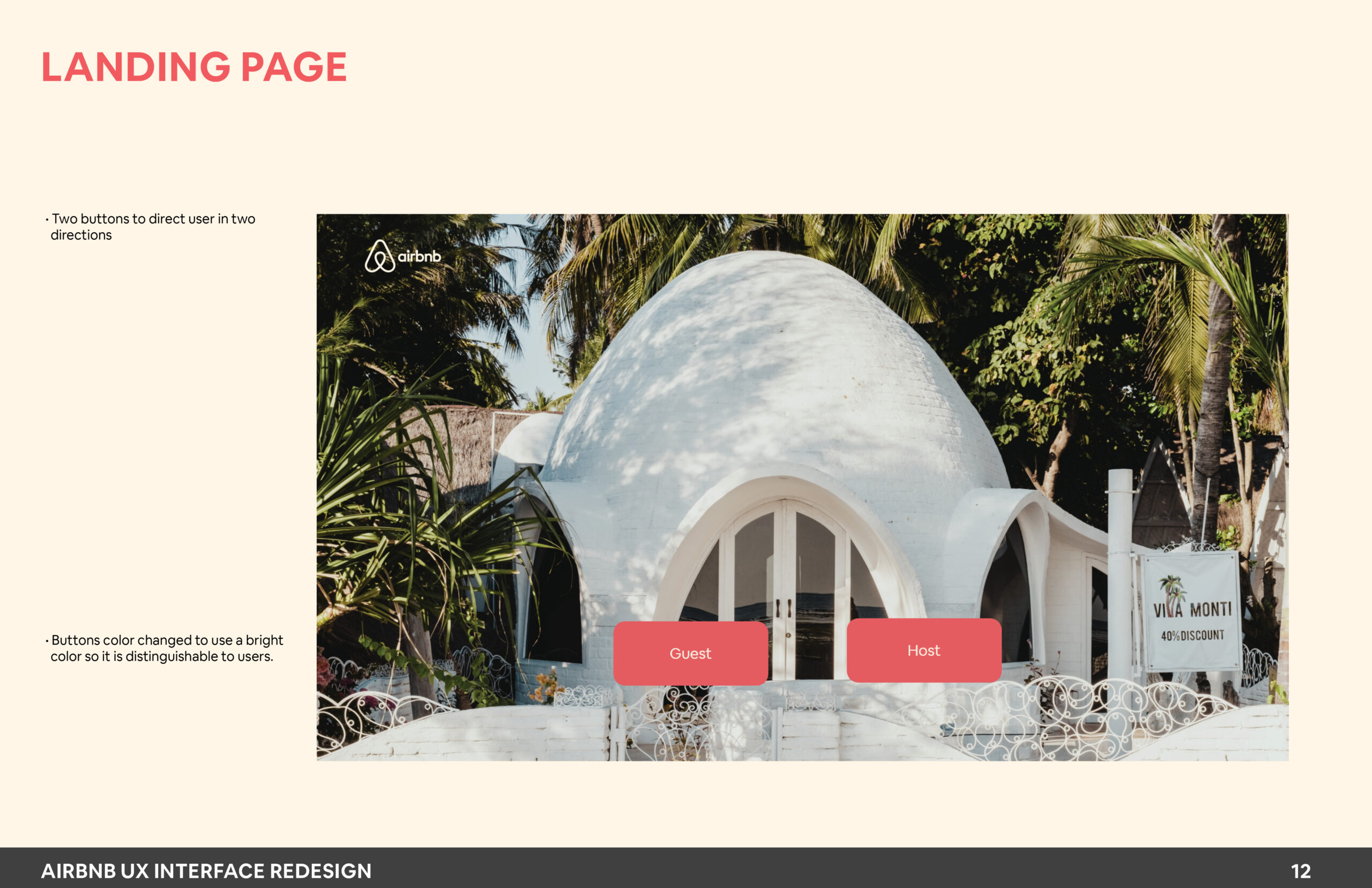
In the new design, the web interface should cater to both primary and secondary users. The landing page will direct the user’s goal for the website: are you a guest or are you a host? By clicking the Guest or Host button, the user will be directed to the appropriate web page within the interface. Pages will share features like Profile, Covid updates, language, and social media.
Wireframe
The wireframe helped sketch the blueprint of the web pages and direct the paths between them.
Using the IA Plan, a wireframe for the following pages were built for the following under consideration:
• Landing Page: to direct user to go to guest or host page
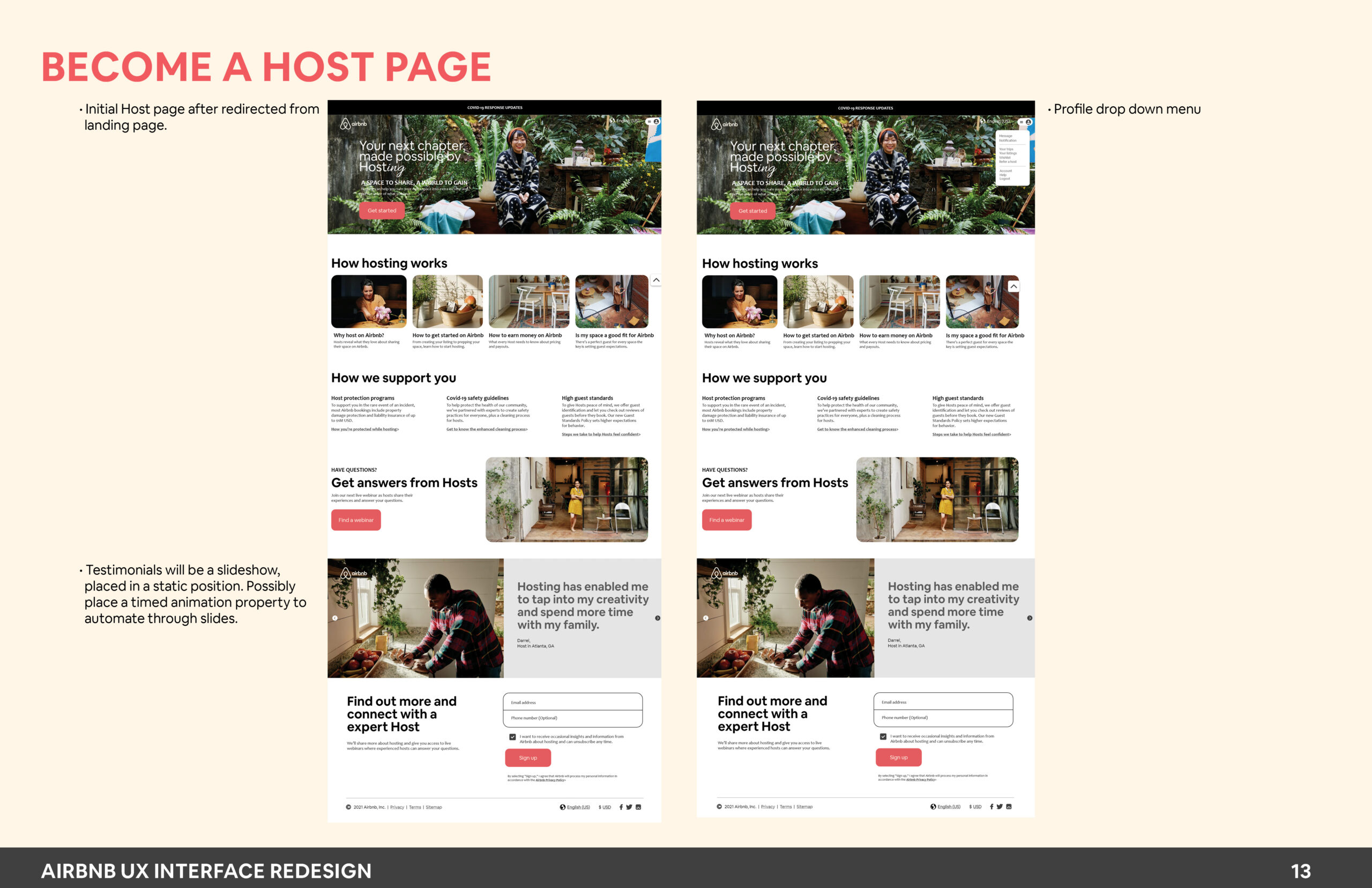
• Become a Host Page: answer FAQ on becoming host and provide resources that would aid users on this endeavor
• Host Profile Page: focus on Host verification and promote profile through reviews on the host and their listings
• Guest Search Engine Page: Search engine is primary focus on page. Recommendations provided through category to filter and sort options for users.
• Search Listings Page: Listing will be primary focus – map will be used an aide tool for the user to refer to
• Listing Booking Page: content will be edited to focus on information that user will easily understand and use to book accommodation.
Each page has a sketch of what content will be featured and in its order. Arrows direct the path that the user will take from page to page.


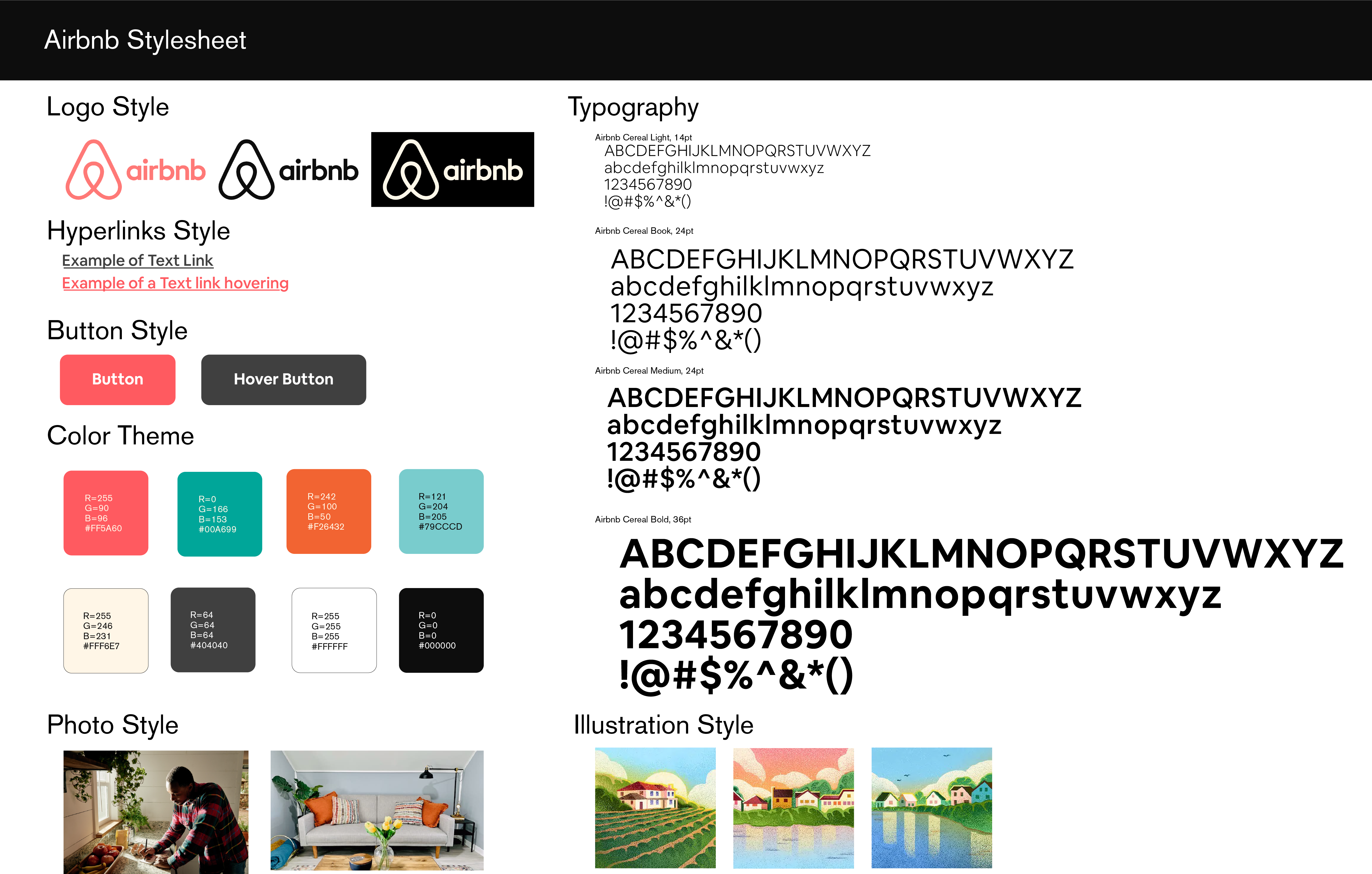
style Guide
High Fidelity Mockup
Using Adobe XD, a prototype was built using images and reference points from Airbnb’s website. This prototype has edited content, along with new added features as well.
Landing Page:
• Places the focus on both users, guests & hosts, to build more user’s confidence that Airbnb caters to both types of users.
Become a Host Page:
• Rearrange hierarchy to place the “How Hosting Works” and “How We support You” information higher up in the web page. It is to help answer questions that users may have.
Host Profile Page:
• Colors are used to follow theme color palette in hyperlinks and icons to place emphasis on host verification and reviews to reassure user’s confidence in the safety of the program.
Guest Search Engine Page:
• Simplified the search engine tool to location and dates of travel.
• “Experience” and “Online Experience” is reduced in content and placed in Discover Experience section. It is to promote the programs an opportunity to explore, along with “Become a host”. The image for each program is larger than the other images to help catch user’s interest.
Search Listings Page:
• The map is a feature that is not open when entering the page. It is a interactive/responsive feature that will open and close.
• A wish licit feature is added in header and as a bookmark icon, which is different from the like feature. The bookmark saves the destination in the wish list page.
• A filter button is place above the search listings to help users sort through their search results.
Listing Booking Page:
• Content was edited and rearranged according to relevant information that user will find important to have. A description, Things to Know, Amenities, Host Information, and Ratings and review were sections users found to be important in testing.
• Qualified hosts are marked with a green verified icon to reassure the user’s confidence in the host’s profile.
High fidelity Mockup in ADobe XD

Digital Prototype in ADobe XD





Conclusion
Research and user testing provided the initial data to find issues that interrupted a user’s journey, which would cause a negative user experience. The recommendations, from the research and testing, provide a way for Airbnb to enhance their user experience through streamlining its contents and omitting repetition and irrelevant materials. Airbnb’s main goal is to focus on the local experiences that guest can have through their hosts. It provides an atmosphere that creates a home away from home encounter that will leave a warm impression on it guests and their hosts. The web interface needs to cater to both kinds of users to build their internal network as well. Airbnb cannot focus primarily on the guest users and neglect the host users. The redesign of the web interface should reflect this philosophy and provide and search for its users with easy navigation and good information that can help connect more people together.